
08-26-2026 – Most Microsoft partners have experienced it.
The emails stop getting answered. The meetings stop getting scheduled. The responses become shorter, less frequent, or disappear entirely.
When that happens, many partners assume the seller is simply busy.
Sometimes that’s true.
But often, something else is happening.
The Assumption
When communication slows down, partners frequently blame external factors. Microsoft reorganized. Priorities changed. The seller got reassigned. The quarter became too busy.
All of those things can happen.
But they don’t explain every situation.
In many cases, the seller hasn’t consciously decided to stop responding. They’ve simply stopped seeing enough value in the interaction to prioritize it.
That’s a very different problem.
The Seller’s Reality
Microsoft sellers operate in an environment where time is scarce and priorities shift constantly. Every day brings customer meetings, internal commitments, forecasting discussions, account planning, and opportunity management.
Their inboxes are full.
Their calendars are crowded.
And their attention is limited.
Because of that, sellers naturally gravitate toward conversations that help them accomplish something meaningful. They respond to people who help them move opportunities forward, solve customer problems, reduce risk, or create value.
Everything else slowly falls down the priority list.
How It Usually Happens
Very few sellers wake up one morning and decide:
“I’m going to stop responding to this partner.”
The process is typically much more gradual.
The partner reaches out.
The seller responds.
The partner follows up.
The seller responds again.
But over time, the interactions start feeling repetitive. The conversations stop creating new value. The outreach becomes predictable.
Eventually, the seller begins responding later.
Then less often.
Then not at all.
The relationship didn’t collapse.
It faded.
The Value Problem
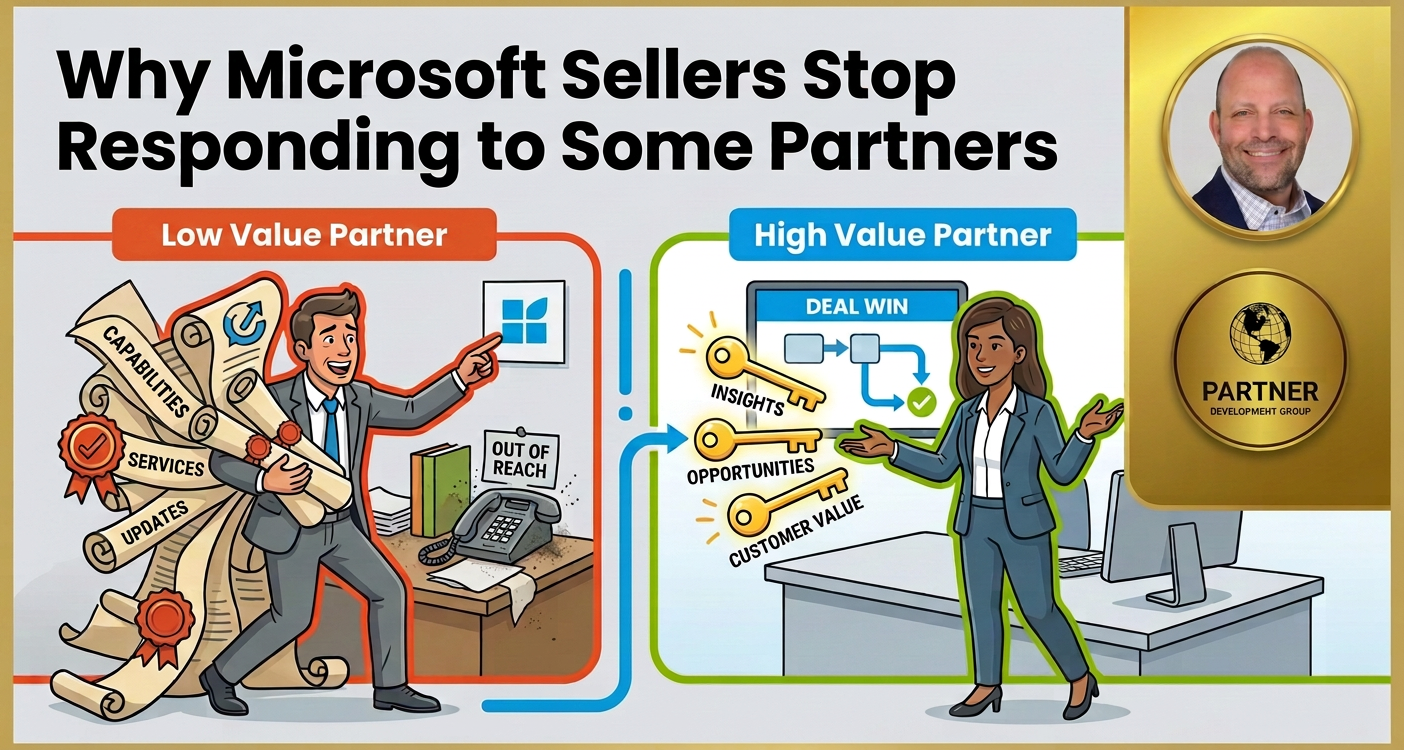
Many partners unintentionally make every interaction about themselves.
They want to share another capability.
Another service.
Another customer success story.
Another company update.
None of those things are inherently bad.
The problem is that sellers are constantly evaluating interactions through a different lens:
- Does this help me with a customer?
- Does this support an active opportunity?
- Does this solve a business problem?
- Does this teach me something useful?
- Does this make my job easier?
When the answer becomes “not really,” engagement tends to decline.
Why Familiarity Can Work Against You
There’s another dynamic that partners often underestimate.
Familiarity can reduce attention.
When every message sounds similar to the last one, sellers begin to assume they already know what the partner is going to say. The conversation stops feeling relevant or urgent.
As a result, responses become less frequent.
Not because trust has disappeared.
Because interest has.
That’s an uncomfortable distinction.
But it’s an important one.
The Partners Sellers Continue Engaging
The partners that maintain strong seller relationships often behave differently.
Instead of repeatedly talking about themselves, they bring new value into the conversation.
They share:
- Customer insights
- Market observations
- Relevant opportunities
- Industry intelligence
- Useful introductions
Their interactions feel productive rather than promotional.
As a result, sellers continue finding reasons to engage.
The Warning Signs
Most partner relationships don’t end suddenly.
They slowly lose momentum.
Common signs include:
- Longer response times
- Fewer proactive conversations
- Less engagement during meetings
- Shorter email responses
- Reduced collaboration on opportunities
By the time many partners notice these signals, the relationship has already weakened.
That’s why paying attention early matters.
The Bigger Lesson
Most partners think responsiveness is a relationship problem.
I think it’s often a value problem.
Microsoft sellers respond to people who consistently help them achieve their objectives. When that value is clear, conversations continue. When that value becomes harder to see, engagement often declines.
The question isn’t:
“Why did the Microsoft seller stop responding?”
The better question is:
“What value were they getting from our interactions, and when did that value begin to disappear?”
Partners that answer that question honestly often discover something important.
The best way to get a response is to be worth responding to.