
07/28/2026 –
For years, managed service providers built their value around responsiveness. A customer had a problem, the MSP fixed it. A ticket was opened, the MSP closed it. A server went down, an endpoint failed, a user could not access an application, and the MSP stepped in as the technical safety net.
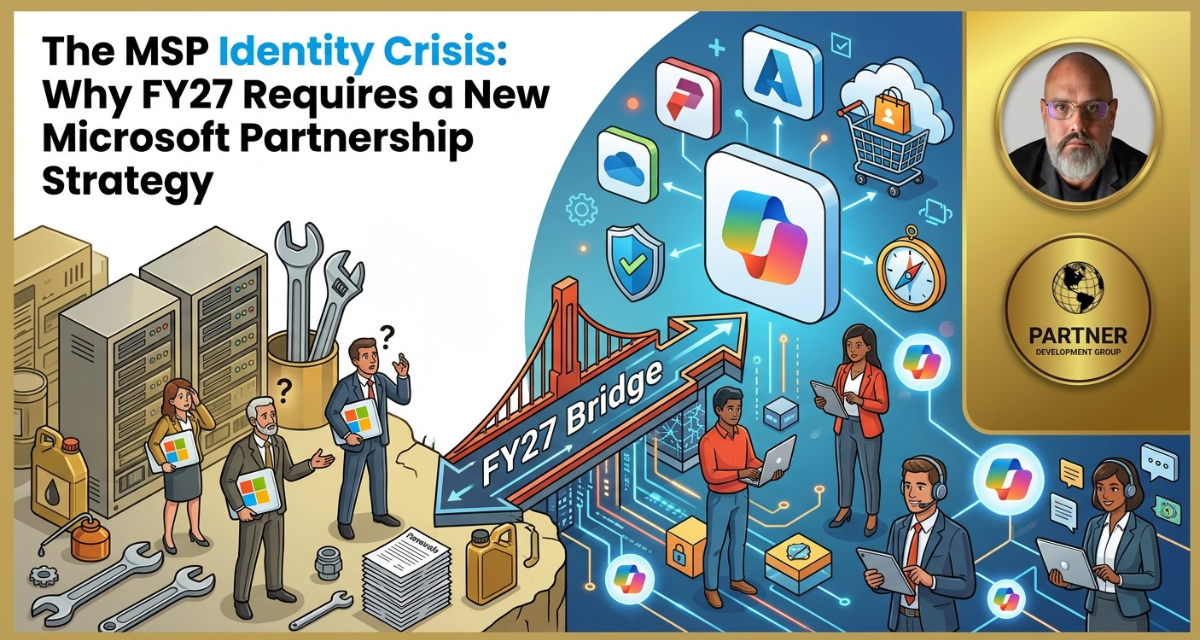
That model still matters. Customers still need reliable support, secure environments, and fast resolution when something breaks. But in FY27, that is no longer enough to create durable differentiation. The most successful MSPs will not win because they close tickets faster. They will win because they help customers achieve measurable business outcomes.
The new MSP value proposition is not reactive support. It is strategic relevance.
Customers Are Questioning the Old Managed Services Model
Customers are not rejecting managed services. They are questioning what they are really paying for. In many organizations, traditional managed services have become difficult to distinguish from basic operational insurance. The MSP keeps systems running, responds to issues, maintains tools, and produces reports. Useful, yes. Strategic, not always.
This is especially true as Microsoft 365, Azure, security, AI, and automation continue to change the customer environment. Business leaders are asking different questions now. They want to know whether technology investments are improving employee productivity, reducing risk, increasing customer responsiveness, controlling cost, accelerating revenue, or enabling better decisions.
If the MSP response is still centered on uptime, ticket volume, patch status, or device counts, the conversation misses the executive audience. Those metrics may be necessary, but they rarely explain why the relationship matters to the business.
The Conversation Has Moved Upstairs
The MSP that remains only in the IT conversation will eventually be treated like an IT expense. The MSP that earns a seat in the executive conversation becomes part of the customer’s planning process.
This shift requires a different kind of discovery. Instead of beginning with tools, licenses, endpoints, or support pain, MSPs need to understand the business agenda. What is the customer trying to improve this year? Where are margins under pressure? Which teams are constrained by manual work? What risks are keeping leadership awake? Where is Microsoft already being paid for but not fully used?
That last question matters more than many partners realize. Most customers are already carrying significant Microsoft investments. The opportunity is not always to sell more. Often, it is to help the customer extract more value from what they already own, then identify the next investment that clearly supports a business priority.
Microsoft Investments Must Connect to Business KPIs
In FY27, Microsoft’s partner opportunity is increasingly tied to measurable transformation across AI, cloud, security, data, and modern work. For MSPs, that creates both an opportunity and a test. The opportunity is to position Microsoft capabilities as business enablers. The test is whether the MSP can translate technical work into outcomes leadership cares about.
That means mapping Microsoft investments to business KPIs, not just service categories. Microsoft Defender is not only a security tool; it can support risk reduction, compliance readiness, and business continuity. Microsoft Teams and Copilot are not only productivity platforms; they can support faster decision-making, reduced administrative burden, and improved employee effectiveness. Azure is not only infrastructure; it can support scalability, modernization, cost optimization, and innovation capacity.
The strategic MSP does not ask, “What technology do you need?” The strategic MSP asks, “Which business result are you trying to improve, and how should Microsoft help you get there?”
Quarterly Business Reviews Need to Become Business Reviews Again
For too many MSPs, the quarterly business review has become a quarterly technical report. It is a meeting filled with ticket counts, service-level performance, device health, threat alerts, and roadmap slides. Those details may be valid, but they do not automatically make the meeting valuable.
A meaningful QBR should answer five executive questions:
· What changed in the customer’s business since the last review?
· What risks, inefficiencies, or opportunities have emerged?
· What measurable value did the MSP help create?
· What Microsoft investments are underused or misaligned?
· What decisions should leadership make next quarter?
That structure changes the tone of the relationship. The MSP is no longer simply reporting on activity. The MSP is helping leadership interpret technology in the context of business performance.
Indispensable MSPs Become Part of the Leadership Rhythm
The goal is not to become indispensable because the customer is dependent on you to fix things. That is a fragile form of value. The stronger position is to become indispensable because the customer relies on your perspective to make better decisions.
This requires MSPs to develop new muscles. Technical excellence remains the foundation, but it must be paired with business fluency, advisory discipline, Microsoft program awareness, adoption strategy, and the ability to quantify outcomes. The MSP must be able to speak to a CFO about cost optimization, a COO about process improvement, a CISO about risk reduction, and a CEO about growth, resilience, and competitive advantage.
That does not mean every MSP needs to become a management consulting firm. It means every MSP must stop treating business context as secondary. The context is the value.
The New Value Proposition
The future MSP value proposition is not, “We manage your technology.” It is, “We help you turn technology into measurable business progress.”
That is a materially different promise. It changes how services are packaged. It changes how success is measured. It changes who the MSP needs to engage. It changes the QBR. It changes the roadmap. It changes the sales conversation.
Most importantly, it changes the customer’s perception of the MSP from a cost center to a strategic partner.
What’s Next?
Reevaluate every service through a business-outcomes lens. For each offering, ask whether it clearly connects to a customer KPI, executive priority, risk reduction goal, productivity improvement, or growth objective. If the answer is unclear, the service may still be useful, but it is not yet strategic.
The MSPs that make this shift in FY27 will not just support their customers. They will help lead them.