
07/13/2026 –
For years, many Managed Service Providers built strong businesses by doing exactly what customers needed most: keeping systems running, managing users, supporting devices, securing environments, resolving tickets, and making sure the technology estate did not burst into flames on a Tuesday afternoon.
That work still matters. In fact, it matters a lot. But in FY27, it is no longer enough to define a modern Microsoft partnership strategy.
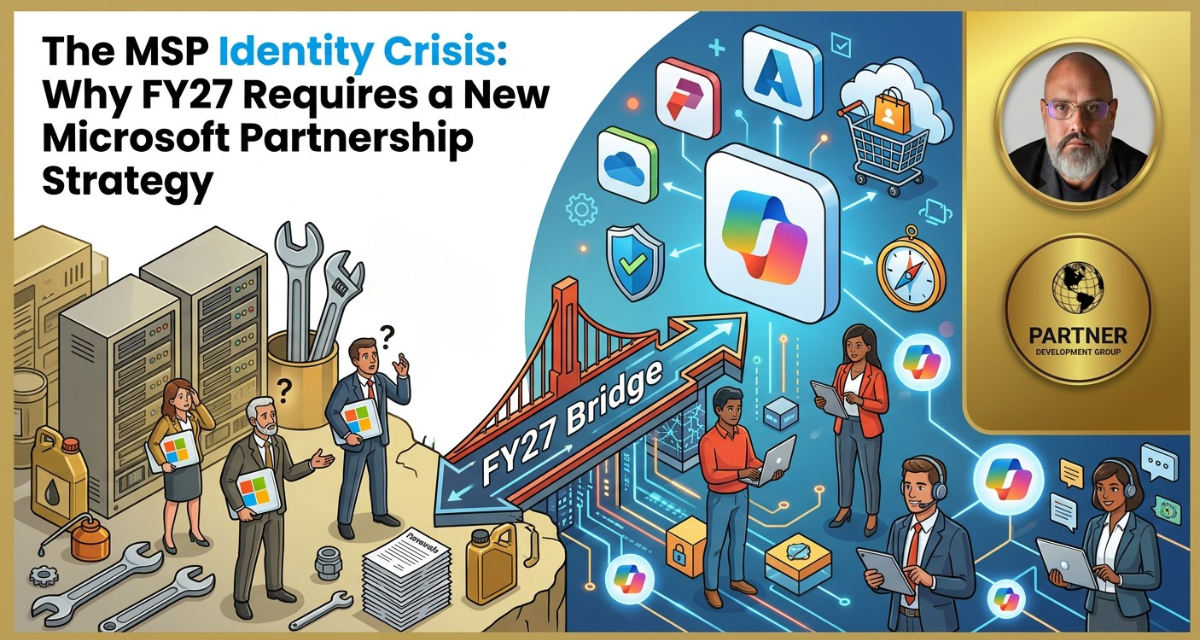
The MSP market is facing an identity crisis. The traditional model of recurring support, reactive service delivery, and license administration is being challenged by a Microsoft ecosystem that is increasingly rewarding partners for something different: business outcomes, AI adoption, security maturity, cloud consumption, and Marketplace-led transactions.
This is not a small adjustment. It is a strategic reset.
From IT Support Provider to Business Transformation Partner
The MSP model was built on operational reliability. Customers needed someone to manage infrastructure, administer Microsoft 365, handle endpoint issues, provide help desk coverage, and keep security tools functioning. That created durable recurring revenue and real customer value.
But customers are now asking a different set of questions, whether they know how to ask them clearly or not.
They want to know how AI can improve productivity. They want to reduce risk without creating more operational friction. They want better visibility into data. They want to modernize business processes. They want technology investments to produce measurable business value, not just another dashboard that someone promises to check someday.
This is where the MSP role has to evolve.
The partner that only maintains the environment risks being viewed as a cost center. The partner that helps customers use Microsoft technology to improve revenue, reduce risk, automate work, and create competitive advantage becomes part of the business strategy.
That is a very different conversation. It is also a much more valuable one.
What Is Changing in the Microsoft Ecosystem
Microsoft’s FY27 direction is making the signal harder to miss. The partner opportunity is increasingly centered on AI Business Solutions, Security, Commercial Cloud and AI, Marketplace, and measurable customer transformation. Microsoft is not simply asking partners to sell more products. It is asking partners to help customers adopt, govern, secure, and realize value from those products.
That shift matters for MSPs because many legacy motions were built around administration and renewal. FY27 requires a stronger alignment to growth, consumption, premium workloads, security outcomes, Copilot adoption, data readiness, and Marketplace strategy.
In practical terms, this means partners need to ask harder questions about their own business model:
• 𝐀𝐫𝐞 𝐰𝐞 𝐡𝐞𝐥𝐩𝐢𝐧𝐠 𝐜𝐮𝐬𝐭𝐨𝐦𝐞𝐫𝐬 𝐚𝐝𝐨𝐩𝐭 𝐀𝐈 𝐢𝐧 𝐚 𝐬𝐭𝐫𝐮𝐜𝐭𝐮𝐫𝐞𝐝, 𝐬𝐞𝐜𝐮𝐫𝐞, 𝐚𝐧𝐝 𝐦𝐞𝐚𝐬𝐮𝐫𝐚𝐛𝐥𝐞 𝐰𝐚𝐲?
• 𝐀𝐫𝐞 𝐰𝐞 𝐦𝐨𝐯𝐢𝐧𝐠 𝐜𝐮𝐬𝐭𝐨𝐦𝐞𝐫𝐬 𝐭𝐨𝐰𝐚𝐫𝐝 𝐬𝐭𝐫𝐨𝐧𝐠𝐞𝐫 𝐬𝐞𝐜𝐮𝐫𝐢𝐭𝐲 𝐦𝐚𝐭𝐮𝐫𝐢𝐭𝐲, 𝐨𝐫 𝐬𝐢𝐦𝐩𝐥𝐲 𝐫𝐞𝐧𝐞𝐰𝐢𝐧𝐠 𝐭𝐡𝐞 𝐬𝐚𝐦𝐞 𝐛𝐚𝐬𝐞𝐥𝐢𝐧𝐞 𝐬𝐭𝐚𝐜𝐤?
• 𝐀𝐫𝐞 𝐰𝐞 𝐝𝐫𝐢𝐯𝐢𝐧𝐠 𝐀𝐳𝐮𝐫𝐞 𝐜𝐨𝐧𝐬𝐮𝐦𝐩𝐭𝐢𝐨𝐧 𝐭𝐡𝐫𝐨𝐮𝐠𝐡 𝐦𝐞𝐚𝐧𝐢𝐧𝐠𝐟𝐮𝐥 𝐦𝐨𝐝𝐞𝐫𝐧𝐢𝐳𝐚𝐭𝐢𝐨𝐧, 𝐝𝐚𝐭𝐚, 𝐚𝐧𝐝 𝐀𝐈 𝐰𝐨𝐫𝐤𝐥𝐨𝐚𝐝𝐬?
• 𝐀𝐫𝐞 𝐰𝐞 𝐩𝐫𝐞𝐩𝐚𝐫𝐞𝐝 𝐭𝐨 𝐭𝐫𝐚𝐧𝐬𝐚𝐜𝐭, 𝐩𝐚𝐜𝐤𝐚𝐠𝐞, 𝐚𝐧𝐝 𝐬𝐜𝐚𝐥𝐞 𝐭𝐡𝐫𝐨𝐮𝐠𝐡 𝐌𝐢𝐜𝐫𝐨𝐬𝐨𝐟𝐭 𝐌𝐚𝐫𝐤𝐞𝐭𝐩𝐥𝐚𝐜𝐞?
• 𝐀𝐫𝐞 𝐰𝐞 𝐬𝐡𝐨𝐰𝐢𝐧𝐠 𝐮𝐩 𝐚𝐬 𝐚 𝐬𝐭𝐫𝐚𝐭𝐞𝐠𝐢𝐜 𝐌𝐢𝐜𝐫𝐨𝐬𝐨𝐟𝐭 𝐩𝐚𝐫𝐭𝐧𝐞𝐫, 𝐨𝐫 𝐣𝐮𝐬𝐭 𝐭𝐡𝐞 𝐯𝐞𝐧𝐝𝐨𝐫 𝐭𝐡𝐚𝐭 𝐠𝐞𝐭𝐬 𝐜𝐚𝐥𝐥𝐞𝐝 𝐰𝐡𝐞𝐧 𝐬𝐨𝐦𝐞𝐭𝐡𝐢𝐧𝐠 𝐛𝐫𝐞𝐚𝐤𝐬?
Those questions may be uncomfortable. They are also the right questions.
Waiting for Customers to Ask About AI Is a Losing Strategy
One of the most dangerous assumptions an MSP can make in FY27 is that customers will clearly articulate their AI needs before the partner has to act.
Most customers are not going to say, “We need a governed Copilot adoption strategy connected to business process transformation, data readiness, identity, security, and measurable productivity outcomes.” If they do, congratulations, you have found the unicorn account. Protect it at all costs.
More often, customers will ask fragmented questions. Can AI help our sales team? Should we buy Copilot? Is our data ready? Is this secure? Can we automate this process? Why are our people still copying data between systems like it is a company tradition?
The MSP has to bring structure to that conversation. Waiting for demand to arrive fully formed gives competitors an opening. It also reduces the partner’s role to order-taking at precisely the moment customers need strategic guidance.
AI adoption is not just a licensing motion. It is a readiness motion, a governance motion, a security motion, an adoption motion, and ultimately a business outcomes motion. MSPs that understand this will lead better conversations and create higher-value services around assessment, enablement, deployment, change management, and ongoing optimization.
The Emerging MSP Opportunity in FY27
The good news is that MSPs are extremely well positioned for this shift if they are willing to evolve.
MSPs already have trusted customer relationships. They understand the environment. They know the operational pain points. They see where security gaps exist, where users struggle, where business processes are inefficient, and where Microsoft investments are underutilized.
That proximity is an advantage. But only if it is converted into a proactive strategy.
FY27 creates an opportunity for MSPs to build services and customer conversations around:
• 𝐀𝐈 𝐫𝐞𝐚𝐝𝐢𝐧𝐞𝐬𝐬 𝐚𝐬𝐬𝐞𝐬𝐬𝐦𝐞𝐧𝐭𝐬 𝐚𝐧𝐝 𝐚𝐝𝐨𝐩𝐭𝐢𝐨𝐧 𝐫𝐨𝐚𝐝𝐦𝐚𝐩𝐬
• 𝐌𝐢𝐜𝐫𝐨𝐬𝐨𝐟𝐭 365 𝐂𝐨𝐩𝐢𝐥𝐨𝐭 𝐩𝐥𝐚𝐧𝐧𝐢𝐧𝐠, 𝐝𝐞𝐩𝐥𝐨𝐲𝐦𝐞𝐧𝐭, 𝐠𝐨𝐯𝐞𝐫𝐧𝐚𝐧𝐜𝐞, 𝐚𝐧𝐝 𝐮𝐬𝐞𝐫 𝐞𝐧𝐚𝐛𝐥𝐞𝐦𝐞𝐧𝐭
• 𝐒𝐞𝐜𝐮𝐫𝐢𝐭𝐲 𝐛𝐚𝐬𝐞𝐥𝐢𝐧𝐞 𝐦𝐨𝐝𝐞𝐫𝐧𝐢𝐳𝐚𝐭𝐢𝐨𝐧 𝐭𝐢𝐞𝐝 𝐭𝐨 𝐜𝐮𝐬𝐭𝐨𝐦𝐞𝐫 𝐫𝐢𝐬𝐤 𝐫𝐞𝐝𝐮𝐜𝐭𝐢𝐨𝐧
• 𝐃𝐚𝐭𝐚 𝐫𝐞𝐚𝐝𝐢𝐧𝐞𝐬𝐬 𝐚𝐧𝐝 𝐩𝐫𝐨𝐜𝐞𝐬𝐬 𝐚𝐮𝐭𝐨𝐦𝐚𝐭𝐢𝐨𝐧 𝐮𝐬𝐢𝐧𝐠 𝐏𝐨𝐰𝐞𝐫 𝐏𝐥𝐚𝐭𝐟𝐨𝐫𝐦 𝐚𝐧𝐝 𝐫𝐞𝐥𝐚𝐭𝐞𝐝 𝐌𝐢𝐜𝐫𝐨𝐬𝐨𝐟𝐭 𝐜𝐚𝐩𝐚𝐛𝐢𝐥𝐢𝐭𝐢𝐞𝐬
• 𝐀𝐳𝐮𝐫𝐞 𝐦𝐨𝐝𝐞𝐫𝐧𝐢𝐳𝐚𝐭𝐢𝐨𝐧 𝐚𝐧𝐝 𝐜𝐨𝐧𝐬𝐮𝐦𝐩𝐭𝐢𝐨𝐧 𝐨𝐩𝐩𝐨𝐫𝐭𝐮𝐧𝐢𝐭𝐢𝐞𝐬 𝐜𝐨𝐧𝐧𝐞𝐜𝐭𝐞𝐝 𝐭𝐨 𝐛𝐮𝐬𝐢𝐧𝐞𝐬𝐬 𝐨𝐮𝐭𝐜𝐨𝐦𝐞𝐬
• 𝐌𝐚𝐫𝐤𝐞𝐭𝐩𝐥𝐚𝐜𝐞 𝐩𝐚𝐜𝐤𝐚𝐠𝐢𝐧𝐠 𝐟𝐨𝐫 𝐫𝐞𝐩𝐞𝐚𝐭𝐚𝐛𝐥𝐞 𝐬𝐞𝐫𝐯𝐢𝐜𝐞𝐬, 𝐨𝐟𝐟𝐞𝐫𝐬, 𝐚𝐧𝐝 𝐜𝐮𝐬𝐭𝐨𝐦𝐞𝐫 𝐩𝐫𝐨𝐜𝐮𝐫𝐞𝐦𝐞𝐧𝐭 𝐚𝐥𝐢𝐠𝐧𝐦𝐞𝐧𝐭
This is not about abandoning managed services. It is about extending them into a more strategic model. The MSP of the past kept the lights on. The MSP of FY27 helps the customer decide what the lights should illuminate next.
The Strategy Question MSPs Need to Ask Now
Every MSP should be asking one simple question as FY27 begins:
Does our current Microsoft strategy reflect where Microsoft, our customers, and the market are actually going?
If the answer is yes, FY27 is an opportunity to accelerate. If the answer is no, this is the time to realign before the gap becomes visible in your pipeline, incentives, margins, customer retention, and competitive positioning.
The MSP identity crisis is real, but it does not have to be negative. It can be the forcing function that moves partners from reactive support to proactive business transformation.
The partners that make that shift now will not just participate in the Microsoft ecosystem in FY27. They will be better positioned to lead within it.
What to do next: Assess whether your current Microsoft strategy reflects where Microsoft is investing: AI adoption, security maturity, cloud consumption, measurable business outcomes, and Marketplace-led growth. If your strategy still looks like a support model with a licensing motion attached, FY27 is the year to rebuild it.